

In the production process of iron and steel enterprises, sinter is the product of the sintering process and the main raw material of the blast furnace process. Its cost accounts for about 50% of the total cost of iron production. The stability of the chemical composition of sinter plays a very important role in the ironmaking process. The accuracy of the raw mix is directly related to the quality of sinter and iron making. The basicity R is the foundation of the quality of sinter. Production practice has proved that the stability of the basicity of sinter is closely related to the sinter yield, drum strength and other indicators. At the same time, blast furnace slag with different basicity has different viscosity, melting, stability and desulfurization capacity, which is directly related to the stability of the blast furnace and the improvement of technical and economic indicators. Increasing the basicity R of sinter stability rate is a key technology in the production of sintering pro cess, and plays an important role in reducing the cost of sintering process and blast furnace process.
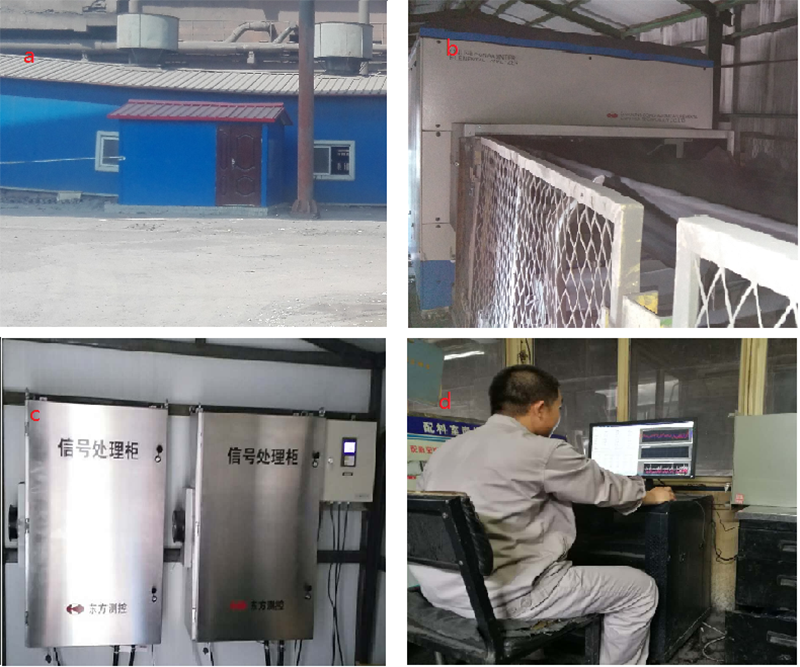
In the traditional sintering raw mix production line, the mixture composition detection mainly relies on manual or mechanical sampling, laboratory fluorescence analysis and chemical analysis, and this method has the following disadvantages: 1. Sampling and sample preparation errors are difficult to eliminate; The detection result lags significantly, about 4-5 hours; 3. Random errors caused by manual operation habits, sense of responsibility, etc. exist for a long time. For a long time, due to the lack of reliable online detection technology, most enterprises have passively optimized production systems and management habits, and the root cause of real-time detection of sinter composition has not been resolved.